Archive | meditation RSS feed for this section

To Think or Not To Think?

Recently, we were giving a meditation class at a central location in Oxford. On the same evening as our meditation class, another room in the building was host to a lecture series which was part of an event called ‘Think Week’.

The location of our room meant everyone coming for the ‘Think’ lecture passed through our room. We would politely ask ‘Meditation or Think?’ (I did consider asking ‘are you here to think or not to think? but thought it would confuse too much) we would then direct them onto the location. One of the attendees was Richard Dawkins, who had already given a lecture in the series. (Dawkins famous for his book God-Delusion and atheist views). Like others, he briefly he popped into our room before being re-directed on to the more cerebral choice of entertainment for the evening.

I’m not sure what these visitors thought of our simple meditation shrine as they briefly looked in. – A picture of a spiritual master  a candle, incense, flute music for meditation and flowers…

It just highlighted the simple choice we face in life. The path of the mind or  the path of the heart.

When we live in the mind, we try desperately to work out which is the best philosophy, the right way of thinking. It is a constant process of judgement, decision and analysis. But, if we meditate and really silence the mind, we don’t feel this sense of judgement. It is no longer a question of right and wrong, best or worst; it is simply a state of being which is joyful and natural.

In the silence of the heart, there is a natural sense of oneness. This is not a mere intellectual belief/hope we are interconnected. It is a un-mistakeable sense that there is only one of us. And what we do to others, we really do to our-self.

Permit not thoughts
To come from near and far.
Let your mind remain
Tranquillity’s blue star.

- Sri Chinmoy 1

However, if we feel the joy of meditation, the joy of silence, we feel it is not so important as to who is right, but only to remain in this state of being.

Related

  1. Excerpt from Silence Speaks, Part 2 by Sri Chinmoy
Comments { 1 }

Exercise To Quieten the Mind

My mind,
Keep your thoughts silent.
Keep your words silent.
Keep everything that you have
And you are silent
To make me and my heart
Extremely happy.

- Sri Chinmoy 1


This exercise is quite easy and makes an excellent introduction to meditation.

  • Sit comfortable and tell yourself for next ten minutes you will just focus on this exercise and nothing else.
  • Begin by observing thoughts that come into your mind. Make no effort to control or direct thoughts, just see which thoughts come into your mind.
  • Don’t judge yourself or your thoughts, but just feel you are watching these thoughts pass through your mind.
  • The secret is to feel that ‘you’ are able to see the thoughts coming from outside into your self. This makes you feel that your thoughts are actually external to your real self. You realise the real ‘you’ is not your thoughts, but something which can view, follow and reject thoughts
  • The next stage is to let go of any thought that comes into your mind. As soon as a thought comes stop following it. Don’t pursue it any further. If you feel it is helpful, imagine you are throwing the thought out of your mind (you can feel you are just waving it away)
  • Again don’t judge any thought that comes in, don’t get annoyed if your mind creates many thoughts, just persist in waving them away.
  • Now, try to lengthen the moments of silence in between thoughts. Try to stop them coming in at all.
  • Even if thoughts do appear, feel they are very separate to you, like fish in the sea they have no effect, but feel very distant and separate. They may be there but they can’t affect you.

This exercise is a good step to becoming aware there is more to your reality than your thoughts. Even if thoughts appear in your mind, they have less power, less hold over you. When the power of thought is diminished, it is easier to go deep into the silent mind – which is the secret of meditation.

Related

Photo: Unmesh, Sri Chinmoy Centre Gallery

  1. Sri Chinmoy,  Seventy-Seven Thousand Service-Trees, Part 6, Agni Press, 1998.
Comments { 1 }

How To Meditate


Meditation is the art of discovering what we already have. At the moment, we are not aware of our soul’s peace because our mind is clouded by our own thoughts. Meditation is learning how to still the mind and enter into this deeper part of ourself.

These steps are the essential aspects of learning how to meditate

Simplicity and Experience

Firstly, meditation is not a complicated or intellectual subject; meditation is inherently simple. When we meditate well, we feel we are doing something natural, spontaneous and joyful. We can read many books about meditation, but to really know what it is -  we have to practise and experience meditation for ourselves.

Concentration

The first step in meditation is to improve our concentration. This is the ability to be aware and focused on only one thing at a time. When we concentrate we put all our attention into the smallest object and exclude everything else. Often in daily life, we get easily distracted; the mind flits from one subject to another. But, when starting meditation we try to keep our attention closely focused. As soon as our mind wanders, we need to bring it back on the object of our concentration. Feel like you are a charioteer, whenever the horse (your mind) veers off course, you must use the reins to keep it going in the right direction.

To improve concentration, try this simple concentration exercise, which involves focusing on a candle.

Breathing

Nothing is more natural and spontaneous than breathing. It is the essence of life, yet  mostly we breathe unconsciously. We can use our breathing to help our meditation.

  • A very simple exercise is to watch your own breath.
  • Feel the breathe coming into your body.
  • Take a pause to hold your breath momentarily before exhaling.
  • The secret is to concentrate all your attention on your breathing.
  • Ignore everything else, but the simple awareness of breathing.
  • When breathing in, you can also imagine you are breathing in the quality of peace.

This simple breathing exercise gives us something very simple to focus on. It also helps to quieten the mind as breathing has a strong influence on our state of mind.

Discipline The Mind

“When you meditate, what you actually do is to enter into a calm or still, silent mind. We have to be fully aware of the arrival and attack of thoughts. That is to say, we shall not allow any thought, divine or undivine, good or bad, to enter into our mind. Our mind should be absolutely silent.”

- Sri Chinmoy 1

To get the most from meditation, we need to still the mind. We need to detach from our own thoughts so that the mind eventually becomes silent. When the mind is vacant and still it gives room for peace to enter. There is an old saying that to fill a pot with milk, you must first empty all the water first. It is the same with meditation, we try to empty our mind of useless thoughts, so we can make room for the peace and bliss of meditation.

How to Quieten the Mind.

When you first start meditation, you may be surprised at how active your mind is. But, don’t despair, it can definitely be made quiet.

  • As soon as a thought comes, don’t pursue it. Let go. Feel it is as insignificant as a fly.
  • Feel thoughts are separate to your self. Feel thoughts are coming from outside of you. Then, even if they come, they will feel less pressing, more distant and easier to ignore.
  • See also: How to stop negative thoughts

The Heart

It is hard to meditate in the mind. Instead we can use the power of the heart. The heart isn’t just a physical organ, it is in the heart that we can feel the presence of our soul – our innermost self. The nature of the heart is to experience oneness and peace. The heart doesn’t manufacture thoughts. When our mind feels it is revolving like a wheel, we can try diving into the heart. Try to feel your sense of being is leaving the brain, leaving the mind and entering into the heart. If you can focus your sense of self here, it will be much easier to be unencumbered by thoughts.

Aspiration

My meditation teacher, Sri Chinmoy, says the real secret of meditation is not in mastering different techniques; the real secret is our own inner aspiration – our inner cry to grow into something deeper, vaster and more fulfilling. If we are not happy with our state of mind, if we really want to experience peace in our life – then we are ready for meditation. When we have this psychic urge our own soul will be able to come to the fore and offer us the experience of meditation.

“How do you meditate? You meditate with an inner cry. There should be an inner cry here, in the heart. The outer cry is ego-centred; it wants name and fame. … While you are feeling this inner cry, you try to make the mind absolutely calm and quiet. If a thought enters your mind, you try to reject it.”

- Sri Chinmoy 2


If we feel our aspiration is weak and feeble, that doesn’t matter. We may start meditation  merely with curiosity. However, we can strengthen our aspiration by reading books by Spiritual Teachers and associating with other spiritual seekers.

Mantra

The use of mantra can definitely help meditation. On some paths of meditation, the repetition of mantra may be the main aspect of that meditation. On our path of meditation, I use mantra when my mind feels unruly. By repeating a sacred word, we can bring purity into our mind. This enables the mind to be quieter and more receptive to meditation.

Regularity

There are no short cuts to mastering meditation. We should see meditation like developing a muscle or learning to play an instrument. If we do it sporadically, we will struggle to make any progress. However, if we devotedly do it everyday, we give ourselves the opportunity to make progress and get stronger. To discipline the mind is not something we can do overnight. And we should never get frustrated by our seeming lack of progress. We have been thinking all our life, we are now trying to do something radically different. We need to be patient with ourselves, but also have the firm faith in ourselves that we can master our own self. If we cannot master our own mind, no one will be able to do it for us! But never feel we are a slave to our mind. We never have to surrender  to our own thoughts.

Inspirational Place

When we are very advanced in our meditation, we will be able to meditate anywhere, be it on a plane or bus. But, in the beginning small details can make a big difference and give us an extra boost to learning how to meditate. If we create a small corner of the room and make a simple meditation shrine, it will inspire us to meditate. We can use a candle, flower, and anything that will inspire us in meditation.

There are many more aspects to learning to meditate. The main thing is just to start! Just try it today and make a plan to meditate everday. It will also be much easier to meditate if you can associate with other people who also meditate. They may not be in a position to teach, but it is good to gain inspiration from others who are doing a similar practise.

Related

Photo top: Tejvan

  1. Excerpt from Earth’s Cry Meets Heaven’s Smile, Part 1 by Sri Chinmoy.
  2. Excerpt from My Heart’s Salutation To Australia, Part 1 by Sri Chinmoy.
Comments { 13 }

Tips for Meditation

Recently, I offered a few meditation exercises. For those interested in meditation, these are a few practical tips that I have felt worked for me during the past 11 years of meditating every day.

Great Power in Group Meditation.

Meditation is about consciousness. If other people are aspiring to the same meditative consciousness it becomes easier for you to be receptive to it. If you are  in New York Times Square, meditation will feel practically impossible. Of course, when we are very advanced, we will have the ability to meditate anywhere, but, in the beginning we should take any help we can get. In the beginning we will make more progress by meditating in sacred spaces and with others who are experienced in meditation.

Feel Thoughts as Separate from Yourself.

In the beginning it is very difficult to stop thoughts coming. But, you can feel thoughts as separate from yourself. Feel that each thought is coming from outside, and you can be like a gatekeeper allowing or stopping them. For a while, thoughts will keep coming into your mind. But, when you start to feel thoughts are separate to your real existence, they lose half their power. It is this feeling of separation from your thoughts that enables you to finally silence the mind.

It is not Like Turning on a Light Switch.

Meditation is a gradual process. You can’t expect instant enlightenment. It requires constant vigilance and practise. But, sometimes when you least expect it, you will be able to go much deeper than ever before.

Soulful Music

Meditation is a sacred activity. It is an awareness of a divine consciousness. Anything that turns the mind to loftier thoughts and experiences will help us in our meditation. We need to feel an aspiration to grow into something more fulfilling and illumining. Soulful music or writings by Spiritual Masters and great seekers can give us that inspiration to delve deep within.

Try a Different Place

We are used to living and identifying with the mind. The nature of the mind is to think, judge and separate. These qualities of the mind are the opposite to true meditation, so if you have difficulty quietening the mind, try focusing on the heart. You have to put your whole attention and concentration on this place in the centre of your chest. Try to feel that your whole existence has become your heart.

Don’t Judge Your Meditation

It is easy to become frustrated that our meditation is not progressing as we would like. Don’t hold onto expectations of certain experiences, concentrate on being in the present moment without judgement. If we are drawn to meditation every day, this alone is a good sign. Don’t give up just because one morning it was difficult; just try again at a more conducive time.

“When you meditate, please do not expect anything either from yourself or from God. You will be able to make the fastest progress if you do not expect anything from your meditation.”

- Sri Chinmoy (1)

Related

Ref:

(1) Concentration, Meditation – Yoga of Sri Chinmoy

Comments { 3 }

Meditation Exercises

There are a variety of different meditation exercises we can try. But, the important thing is not the number or type of meditation exercises that we learn – but how we practise them. The essential qualities of meditation we need to develop are:

  • Intensity. If meditate half-heartedly, we will struggle to meditate.
  • One Pointed Concentration. However, we meditate, we have to feel at the time nothing else is important. Nothing else should come to bother us.
  • Aspiration. This is the desire to dive deep within and experience a more divine consciousness. If we feel this need for real peace and joy, we will have the intensity and discipline to meditate.
  • Regularity. Meditation is an art. We need a daily discipline to improve our ability to detach from the mind.
  • Ability to detach from thoughts.

“When you meditate, what you actually do is to enter into a calm or still, silent mind. We have to be fully aware of the arrival and attack of thoughts. That is to say, we shall not allow any thought, divine or undivine, good or bad, to enter into our mind. Our mind should be absolutely silent. Then we have to go deep within; there we have to observe our real existence. “

- Sri Chinmoy

When giving meditation classes in Oxford, I tell people about different meditation exercises, Sri Chinmoy has written about. Other paths, will have their own variations and types of meditation exercises. However, I personally find these three meditation exercises very effective. Often people report that they have good results from these.

Three Simple Meditation Exercises

1. Concentration on A Candle

Basically, we put all our attention and focus onto a small tip of the candle. We exclude everything else from our awareness. With this concentration we can make great progress with meditation. See – Simple To Learn Concentration Exercise

2. One-Four-Two Breathing.

Many forms of meditation use observance of your breathe. This is a simple, but, powerful exercise which can absorb your attention and enable you to go deep within. In addition, our breathing can have a profound impact on our state of mind. I often use this exercise myself, because I find it very helpful.

“The rhythm of your breathing is most important. If you breathe in for one second or for one repetition of the name of the Supreme, then you should hold the breath for four seconds or four repetitions. Then, when you breathe out, it should be for two seconds or the time it takes you to repeat the name of the Supreme twice. The breathing should be done softly and silently. When you breathe in and out, you should do it so gently that, even if there were a thread right in front of your nose, your breathing would not move it.”  (- Sri Chinmoy, Pranayama. Read More)

3. Meditation on the Heart

It is in the heart where we find it easiest to distance ourselves from our own mind and own thoughts. The nature of the mind is to think, judge and separate. The nature of the heart is to feel oneness, love and identification with a vaster consciousness.

We can just concentrate on our own heart beat and try to imagine our whole sense of being is located in the heart. If you find helpful you could visualise a beautiful garden or light within your heart centre. Try this Meditation on the Heart Lotus Video

Related

photo top Daria, Sri Chinmoy Centre Galleries.

Comments { 2 }

Tips for Meditation

Hydranga

Hydrangea

I have not written on meditation for a while. I have been busy offering free meditation classes in my home town of Oxford and in York. I always learn quite a few things when giving meditation classes. These are some tips which will help learning your meditation.

Regularity.

If we want to enjoy listening to a music concert, we can take part whenever we feel like it. But, if we want to perform in a classical music concert we would expect to practise everyday. To develop our meditation capacity, it is important to practise at least once a day. Sometimes, our meditation, may feel unproductive; it feels like we are not getting anywhere. But, these more difficult times are just as important as the times when meditation seems effortless. We cannot expect to eat the most delicious food everyday, but, still we need to eat everyday. With regularity, and if possible, punctuality, we will be able to make the fastest progress.

Meditating with others.

To meditate with others, we can benefit from their silence and their focus. We consciously or unconscioulsy benefit from the meditative consciousness that builds up. So these group sessions can be beneficial to our own practise.

One Four Two exercise.

In Meditation, Sri Chinmoy describes this powerful breathing exercise.

The rhythm of your breathing is most important. If you breathe in for one second or for one repetition of the name of the Supreme, then you should hold the breath for four seconds or four repetitions. Then, when you breathe out, it should be for two seconds or the time it takes you to repeat the name of the Supreme twice. The breathing should be done softly and silently. When you breathe in and out, you should do it so gently that, even if there were a thread right in front of your nose, your breathing would not move it.

In normal breathing both of our nostrils are usually functioning. But when we breathe properly through alternate nostrils, we get immediate relief from mental anxiety, worries, depression and many other things that cause disturbances in our nature. Alternate nostril breathing is a most important breathing exercise. We start by using our right thumb to close our right nostril. Next we breathe in with the left nostril, silently repeating the name of God, Supreme or puraka, just once. Then we close the left nostril with the fourth finger of the right hand, and with both nostrils closed, silently repeat the name of God, Supreme or kumbhaka four times while holding the breath. Finally we lift the thumb from the right nostril, still keeping the left nostril closed, and exhale, repeating God, Supreme or rechaka twice. (from: Pranayama)

I find it very helpful for meditation. It gives my mind two things to focus on:
My breathing and counting the mantra. I find this very effective for absorption in the meditation exercise.

Like all meditation exercises, it is important to not just do this mechanically. It is not like counting sheep when we are trying to get to sleep. We repeat the mantra with soulfulness and the aspiration that the mantra embodies a certain quality. You can choose Supreme, Aum or anything that inspires you most.

Comments { 10 }

Meditation Music

verbena-meadow-effect

Readers Question: Can you recommend some meditation music you mentioned in this post Introduction to Meditation

These links will help provide some inspirational music for meditation

  • Flute Music for Meditation by Sri Chinmoy m4a
  • Esraj by Sri Chinmoy – haunting, tradition Indian instrument
  • Sitar music by Adesh Widmar

Other Links of Meditation Music

Using Music For Meditation

I often use music whilst meditating. It has to be music composed and performed in a meditative consciousness. It is not the music that excites and stimulates, but the music that inspires us to dive deep within.

Music can be useful if you meditate in a noisy environment (e.g. student flat) The right kind of music can also help still the mind.

The power of soulful / spiritual / meditative music is that it has the capacity to awaken our inner aspiration. It is this inner cry that is the most important aspect of meditation.

Meditation and music is quite a personal choice, but it is well worth exploring.

Related

Comments { 2 }

Meditation Moments

rainbow_flock

A guest post by Jogyata Dallas

A deep meditation is one of the most beautiful and fulfilling of all possible experiences. Once we have learnt how to find our way into that inner stillness and desireless peace that is always there inside us, our life will never be the same. Here in the sanctuary of the heart, free of time and the burdens of the mind, everything is clear, everything is already done. Out of this silence comes wisdom, understanding and delight.

Continue Reading →

Comments { 3 }

A Meditation Exercise For Self-Discovery

I occasionally give meditation classes in my home city of Dublin. The great thing about giving classes is that they attract amazing people from all different corners of the globe and walks of life. Many of them are there looking for techniques to relieve the increasing amount of stress and anxiety that they face in their lives. Others, though, come looking for something that goes beyond just stress relief; they feel that meditation can somehow give them a deeper sense of themselves, and expand their awareness of who they are. And they are right. It can.

Many of the exercises we teach in our classes stem from one very simple secret I learned from my meditation teacher, Sri Chinmoy – to meditate on the heart instead of the mind. Seeing as our overactive mind is the source of many of our worries, meditating in the mind can often lead to tension and stress. On the other hand, the heart is that space in the middle of the chest we point to when we refer to ourselves, so naturally it is a very good place to begin any journey of self-discovery.

This meditation exercise works on two levels – it helps to purify the mind of all the superfluous chatter that gets in the way of our self discovery, and (more importantly) it makes us identify with a much deeper part of our nature that goes beyond the body or the mind. When we are in the heart, we see that it is always aspiring and reaching towards a greater sense of happiness. And according to all the great meditation teachers, that sense of perfection and true happiness lies within us, in the highest part of our being – for example, Zen Buddhism talks about how we are already enlightened, we just need to uncover it, and of course there is the famous utterance of the Christ “the Kingdom of Heaven is within you”. We call this highest part of our being the soul, although many people have their own language to describe it.

Method:

1. It doesn’t matter if you use a cushion or a chair to sit; the important thing is that you keep your back straight. For this exercise, you can keep your eyes closed and your hands turned upwards on your lap.

2. For the first couple of minutes, just slowly scan through your body from to bottom, making sure that everything is relaxed. Make any little adjustment you need to make to ensure your body is relaxed and free of tension. Pay particular attention to your neck and shoulders as this is where a lot of tension builds up.

3. When we are fully relaxed, we will begin the meditation proper. When you breathe in, slowly repeat to yourself “I have no mind, I have no mind. What I have is the heart.” As you say this, try to feel that at this moment the mind does not exist, that the only part of you that is truly real is the heart. As you feel more and more that the heart is the only real part of you there, your attention will be focused there more and more. If the mind interrupts with its thoughts, don’t worry, just bring your attention back to the exercise.

4. After 3 or 4 minutes, we can take a step further, from the heart into the soul. This time repeat to yourself “I don’t have a heart. What I have is the soul.” Feel that deep inside the heart lies the soul, the highest part of your being, which is all beauty and all light. Again, feel that the soul is the only real part of you – this will naturally bring your attention more and more to it.

5. After another few minutes, you can take a further step, saying this time “I am the soul”. This beauty, joy and peace is not just something lying dormant inside you, it is what you truly are. As you say this, you are far beyond the limitations of your mind and body, and you can feel as tremendous feeling of purity and inner freedom enter your being. Try and stay in this beautiful space for as long as you can.


A lot of people who come to meditation classes have very beautiful experiences from doing exercises like this one – the experiences tend to vary from person to person, as the exercise serves to bring our the unique qualities of your soul. If anyone is inspired to try and let us know if they had any nice experiences, we’d be more than happy to hear about it!

Photo: Sri Chinmoy Centre Galleries

Comments { 4 }

The three stages of meditation

The first time many of us encounter the concept of meditation is through images in TV and movies, showing cross legged yogis sitting in serene bliss for hours on end. However, any of you who have ever tried meditation know that that is a pretty advanced state, and not something that can be attained by just going to a workshop or two! In fact the journey can be broken into three different stages – concentration, meditation and contemplation, as described below:

Concentration

Many meditation teachers recommend their students to learn the art cof concentration before they embark on meditation proper, and indeed many of the exercises taught in introductory meditation classes could more aptly be called concentration exercises, as they teach the art of quieting the mind and bringing the multiplicity of thoughts buzzing around our minds to just one – focusing on the object of concentration. From a personal perspective, I can definitely vouch for how important this is – I have lost count of the times I was having a very nice meditation experience, only to lose track of it by being carried away by the most mundane thoughts. A couple of weeks ago, I wrote about a very nice concentration exercise you can use; you can also begin with something a simple and as natural as focusing on the breath, letting your attention follow the breath as it moves in through the nose and out through the mouth.

Meditation

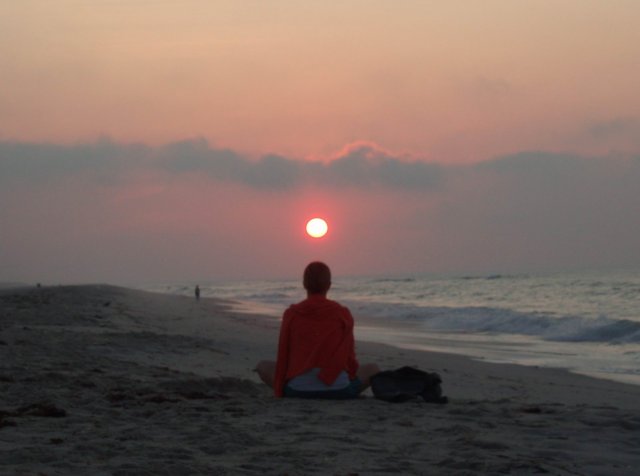
Once we have stilled the mind and brought our focus down to one thought, we can then move into meditation proper. We move beyond the mind and expand into the space of vastness and peace that lies beyond out thought. We have all had meditative moments before – looking at the sun setting over the beach or holding a newborn child in your arms, moments where in the silence all of life seemed to be contained and where everything just seemed to make sense. Through meditation, we expand this state of awareness and make it a real and permanent part of your daily life.

Once we gain regular experiences of meditative stillness, we can live our lives knowing that there is a core of contentment inside us that does not depend on how things are going on around us – that the true source of happiness is within.

Contemplation

In contemplation, we move beyond merely experiencing these realms of peace and bliss inside ourselves; we try to merge and become one with the experience, so that we are the peace and bliss we are experiencing. In other words, the lowest part of our being enters into and unites with the highest part. People usually do not embark upon contemplation until they have spent at least a few years concentrating and meditation, and there are very few people who have absolutely perfected this art.

As children we believe that we can be anything we want, and then begin settling for less all throughout our adolescence and adulthood. In contemplation, our sense of self-awareness expands and we realise that anything is truly possible, that there are no limits is we truly believe in ourselves. At that stage we truly begin to realise and act from our highest potential.

Concentration challenges the restless world.

Meditation graces the aspiring world.

Contemplation embraces the beautiful world.

- Sri Chinmoy

Image source: World Harmony Run

Comments { 1 }